The Fool's Journey
The Hanged Man (XII) and Justice (XI)
The light is off until it’s on, the door open until it’s closed, the monsoon the heat before the rain. A mother is a daughter and then she is a mother—inscrutable as both, adult as both, child as both. Once, I loved you and I thought I discovered a truth; once I loved you I thought I discovered a truth.
Yesterday someone said to me ‘it sounds so obvious when you say it’ and I said I have the easier job of saying it, you have the more difficult job of trusting it. To receive something and to believe it to be true is trust. To receive something and to want it to be true is desire. The first gives strength, the second gives pleasure—all pleasure the fulfilment of want, that feeling that reminds us to eat, to drink, to breathe, to live. It takes strength to forego pleasure, and it takes trust to forego desire. How I knew to say goodbye and that I knew to say hello is because I trusted; how I knew to say goodbye because I trusted the you I received; how I knew to say hello because I trusted the you I received.
In The Fool’s Journey, as told by the tarot, the first time the Fool’s sense of self changes is not near the end, but right in the middle. He is asked: what desire of yours are you prepared to sacrifice? Sometimes, the Fool dallies—he looks at what he has received and he thinks whether to trust it. Sometimes, he thinks whether he wants to trust it. What desire of mine am I prepared to sacrifice? Am I strong enough to sacrifice it—my most obvious desire, the easiest to reach for, the desire I know myself through—do I trust that I can? The answer, if it’s yes, when it’s yes, because it’s yes, has to be yes.
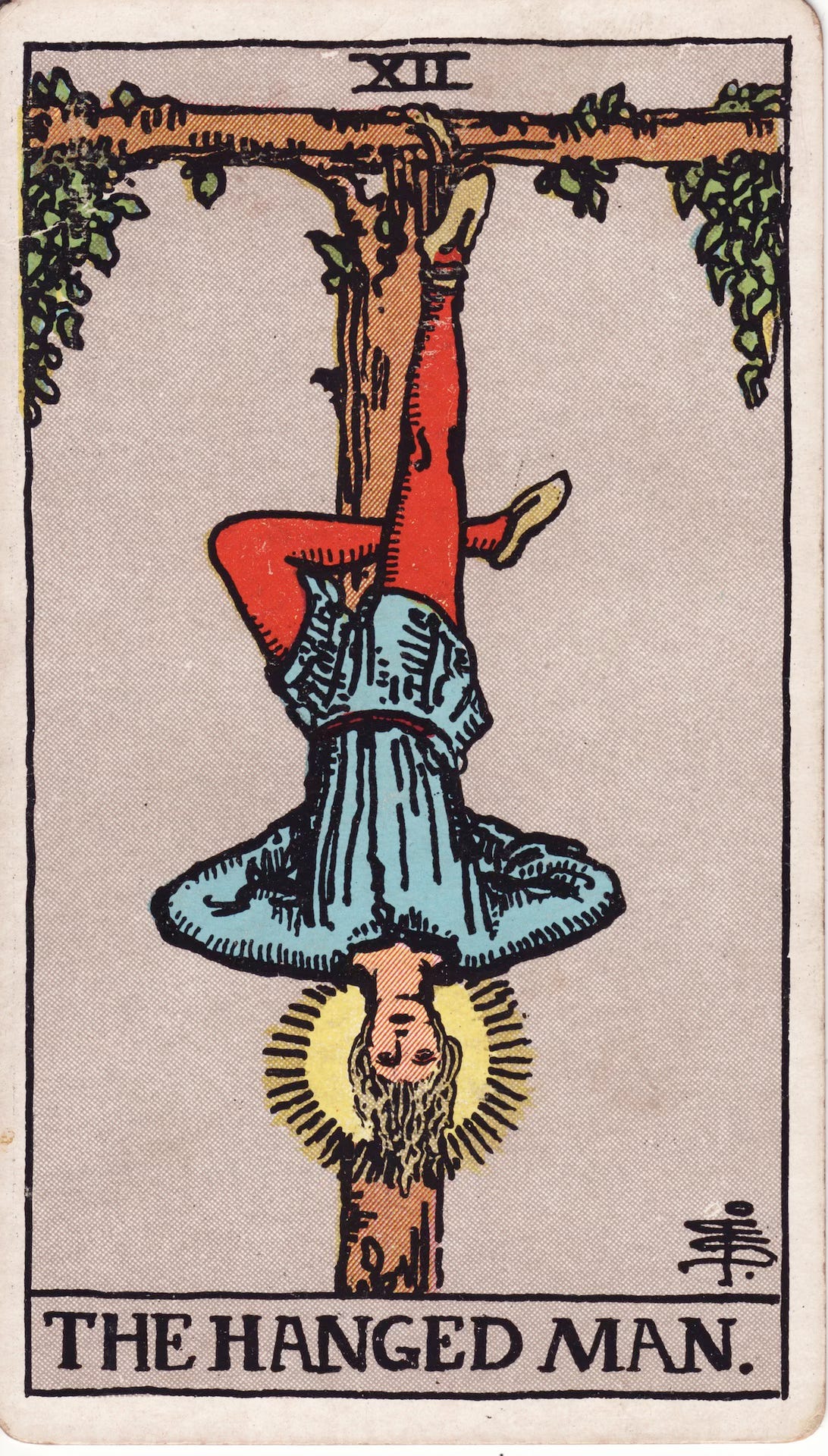
So the Fool relents, climbs onto the parapet, finds, in himself, what he knows about himself through his desire, and he extracts him deftly, this similitude of himself, and then, unburdened by his want, he jumps, one leg pointing to the sky, his hands he tied judiciously behind his back, his eyes looking back at himself, him at his want, his want at him, and there is something about this inverse that resembles a truth.
Yes—this inverse resembles a truth. That who I am is no longer who my desire was. And that this is because of trust, that I received something and I believed it to be true. To receive and to want nothing but what you receive, this is strength. To not bargain with life. To accept the inverse as the truth: to sacrifice desire. To do this to do it, because this is the journey of the Fool, because to accept a truth about who you are is to accept a truth about who you have become, is to accept that becoming is a series of choices, that to trust is a choice—to leap from the parapet, to look back at yourself, and to accept that the inverse resembles a truth.
The Hanged Man is the twelfth card in a suit of twenty-two, the Fool’s metaphor for this moment in his life he jumps so naturally into. The Fool comes to this by way of the eleventh card, Justice. Justice instructs: asses what you have received, and do justice in your assessment. The truth is found by way of weighing what you receive against what you want. So you weigh. What you find is either hand heavier than the other—so the truth is what you received, or the truth is that you received, and that you wanted more—or both hands at equilibrium—so the truth is that you received as much as you wanted, or the truth is that you wanted as much as you received.
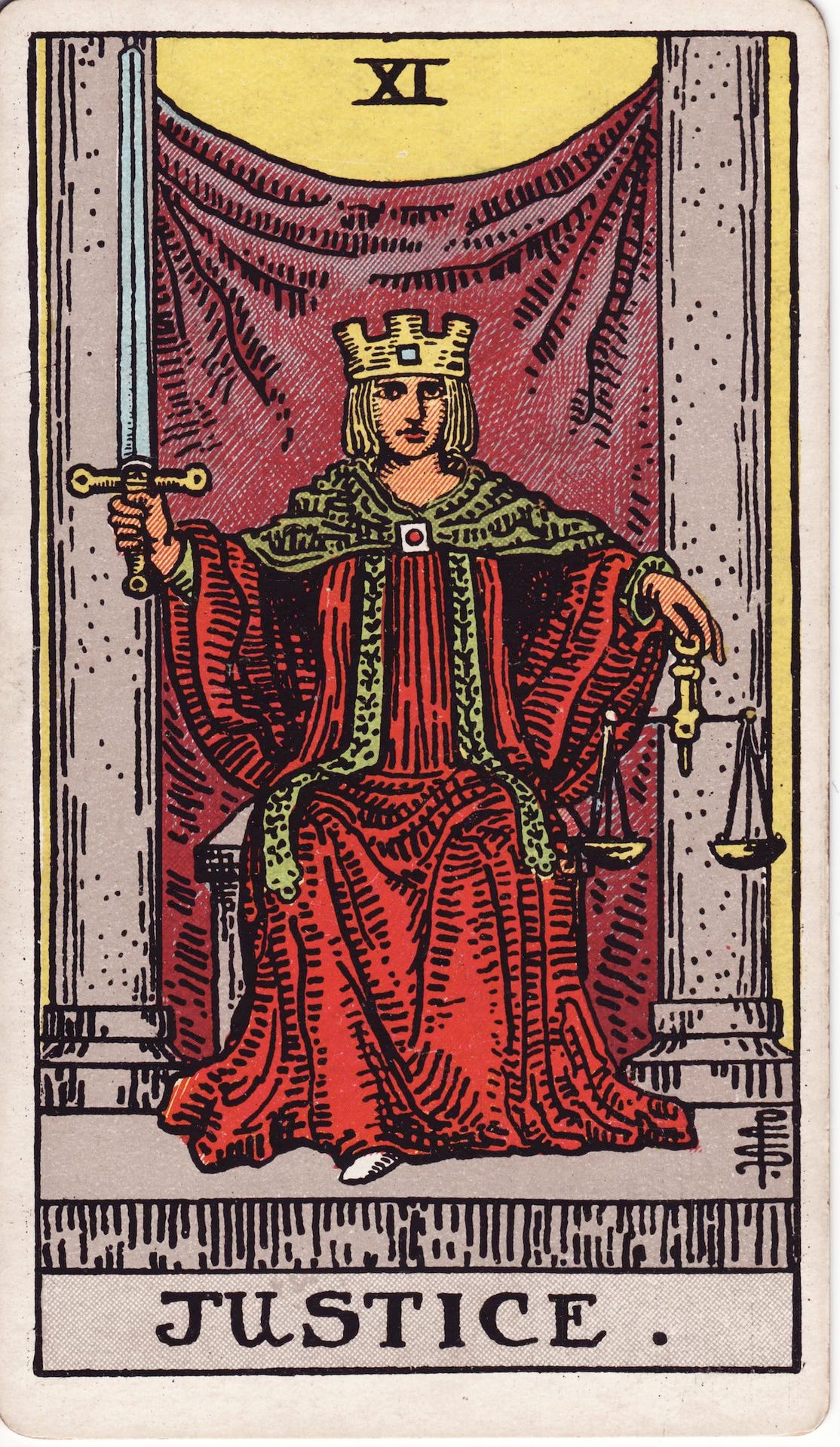
Justice asks the Fool to make a choice: which is true?
The Fool chooses.
The Hanged Man asks the Fool: what truth of yours are you prepared to sacrifice?
The Fool chooses again.
Death, the thirteenth card, asks the Fool: is this true?
The Fool chooses.
The Fool jumps.
The Fool lives.
The Fool replies: this is the inverse that is true; yes, yes, yes it’s true.